Don’t Sleep
10 solutions for sleeplessness I learned the hard way—and no, I did not pick 10 because I'm attempting to be click-bait-y in the style of a 2019 SEO manager

I slept extremely well, all my life; before 2024, I could count on exactly two fingers the number of nights I’d been upset enough that it disturbed my sleep in the slightest. Through breakups romantic and platonic, work injustices, deaths, divorce, infants, teenagers, firings, hormonal shifts, and the fall of America, I had slept peacefully. My mother’s always slept well, too, so I believed that I would always be that way.
A series of unfortunate events during a single 6-week period changed everything, however. Suddenly I was wide awake, fully wired, way way way too early: 4 am ish. To add insult to injury, sometimes I couldn’t fall asleep, either.

I’m an eldest daughter; I live for approval, and my Oura ring had previously been a source of deep satisfaction for me. Oh I slept well, again? That’s fantastic! Never mind beauty sleep: medical experts and optimizer bros alike confirmed that there was nothing in this world as health-promoting and even death-defying as a good night’s sleep.
But suddenly The Oura trumpeted nothing but bad news. 5 hours, 3 hours, 4 hours. The Oura tried valiantly to look on the bright side: “It’s going to be all right,” it said some days. “You were efficient,” it offered on others, noting that I’d managed to cram in deep and REM sleep into the few hours. The Oura couldn’t lie, though: “Pay Attention” it said in red, on many days, on many metrics. It got a new metric, a sleep deficit calculator called Sleep Debt. A Rumination and Racing Thoughts metric is doubtlessly being worked on.
At the suggestion of everyone, I tried forgoing the Oura. I discovered that no, the Oura was not the problem. On the contrary, the Oura was the only one not gaslighting me, my only companion in fully acknowledging my sleeplessness. As with dreams, no one actually wants to hear about another person’s bad sleep; at some level no one wants to believe in it, either. “Are you sure it’s that bad?” “I’m sure you’ll sleep tonight then.” “Have you tried …?”
People with migraines understand the singular misery of the “Have you tried …?” I tried: meditation, therapy, magnesium, YouTube EMDR, intense exercise, cyclic sighing, ashwaganda, hypnosis, no food 3 hours before bed, yoga, the Pennebaker technique (where you write about the trauma or trouble), aromatherapy, acupuncture, the 4-7-8 breaths, baths before bed, sauna not right before bed, l-thianine, a 3-day retreat with binaural beats. I listened to Huberman and faithfully got sun in my eyes (as soon as it rose), made sure my bedroom was cold, and avoided screens at night. I had my cortisol tested (much too high in the mornings, quel surprise), my thyroid tested, and my hormone levels checked several times. I don’t like drugs, mainly because most of them have very little effect on me, but I tried CBD, THC, Xanax, and Valium: nothing.
I got to what finally worked when, desperate, I asked two different doctors to prescribe me something stronger than Xanax or Valium. It was hard for me to believe that they both independently recommended the same solution, and still, it’s hard for me to believe it worked as well as it did. My feeling is that it worked in combination with some of the other things I was doing and still do, all of which are listed below (#10 is the doctor-recommended all-star, but 1-9 are serious, serious support that might easily be enough on their own for a less-entrenched problem, or the occasional sleepless night).
Creatine in your morning coffee. While I take it primarily for muscle-building/retention, I swear creatine makes an unslept brain noticeably (if marginally) more functional. (Great studies back this up, btw.) Note that this tip is not about sleeping well, it’s about coping if you haven’t/
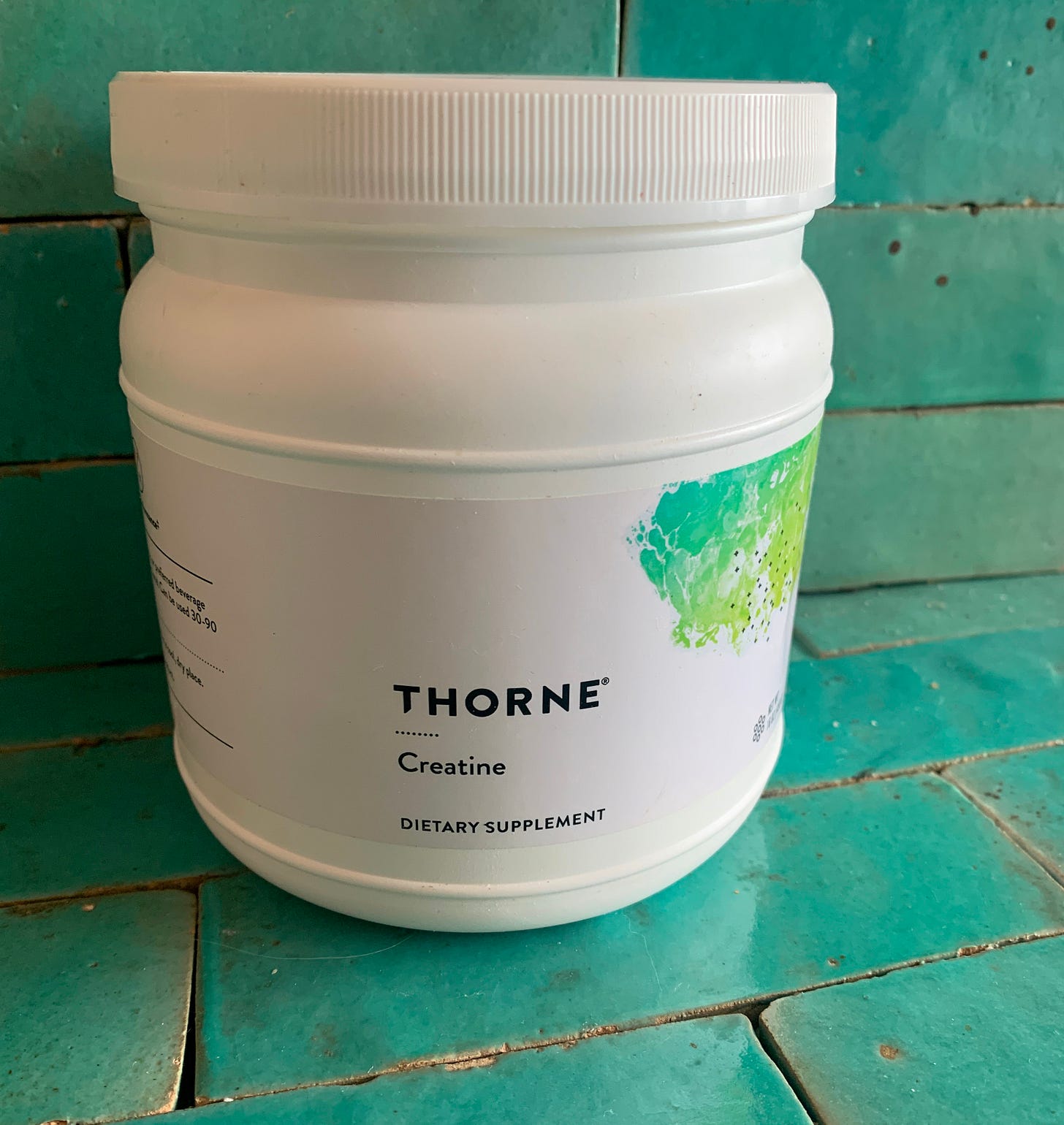
I mix 5g of this creatine into my coffee; it is tasteless beyond a slight bitterness (that really works with coffee). I believe that A, it’s helped me increase my strength, and that B, it helps me think on days when I thinking might be otherwise impossible. (This could of course all be psychosomatic, but creatine is one of the most-studied supplements there is, and my results do reflect those reported in many studies). I get Thorne because they are large enough to have to be reputable. * I am afraid of all supplements because I read the terrible stories: get the wrong one (no way to tell if you’re getting the wrong one) and you haven’t just been ripped off, you’ve been poisoned. Why can’t we pay a few extra taxes and have our for-the-people government regulate supplements? A bath before bed—with this oil. Any bath or shower before bed will help you fall asleep easier: the drop in temperature that happens when you exit is the main reason.

Is it that OSEA Vagus Nerve bath oil makes the whole room smell like chamomile, lavender, juniper berry, rosemary and lemon tea tree? That it’s rich and moisturizing and skin-silkifying but doesn’t vandalize your tub? Or is just that it says “Vagus Nerve” on it? Double-blind studies will have to be conducted at some point, but for now, try it and tell me I’m wrong. More than simply soothing, it is downright entrancing. Cyclic sighing takes down the physical sensations of anxiety better than anything I have tried: inhale fully through your nose, then do another inhale on top of it. So two inhales, with no exhale in between. Then exhale as slowly as you can. Repeat until the whirring in your chest subsides. It’s kind of a miracle.
Magnesium threonate. Huberman was adamant about this one, and when (before the no-sleeping), the Oura complained that I wasn’t getting enough deep sleep, I started taking the magnesium threonate and immediately—like the first night—I started getting enough deep sleep, with many congratulations from the Oura.